
Last updated September 10, 2026
Full 25-point door and opener safety check with every visit - springs, cables, rollers, tracks, and your LiftMaster or Chamberlain opener included
You get a price before we start. It does not change when the truck arrives.
 Before
 After
After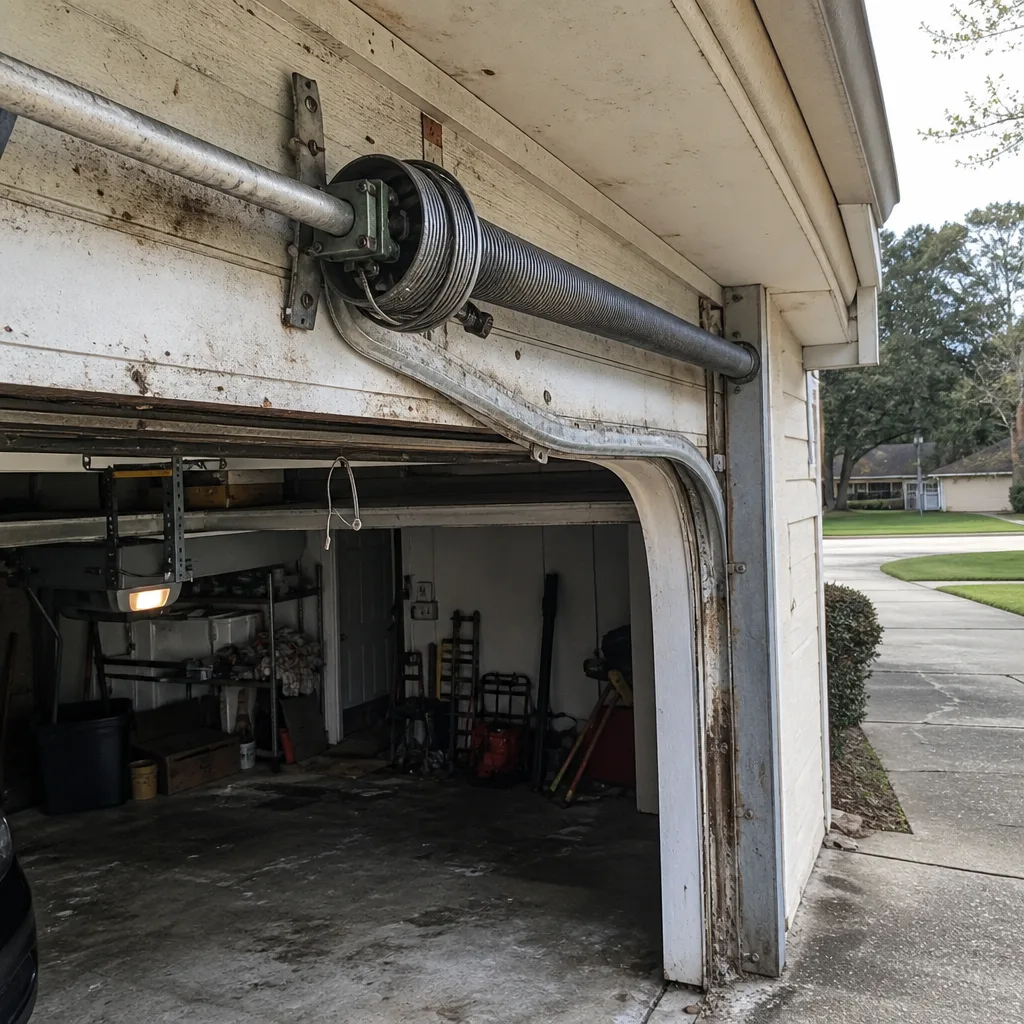 Before
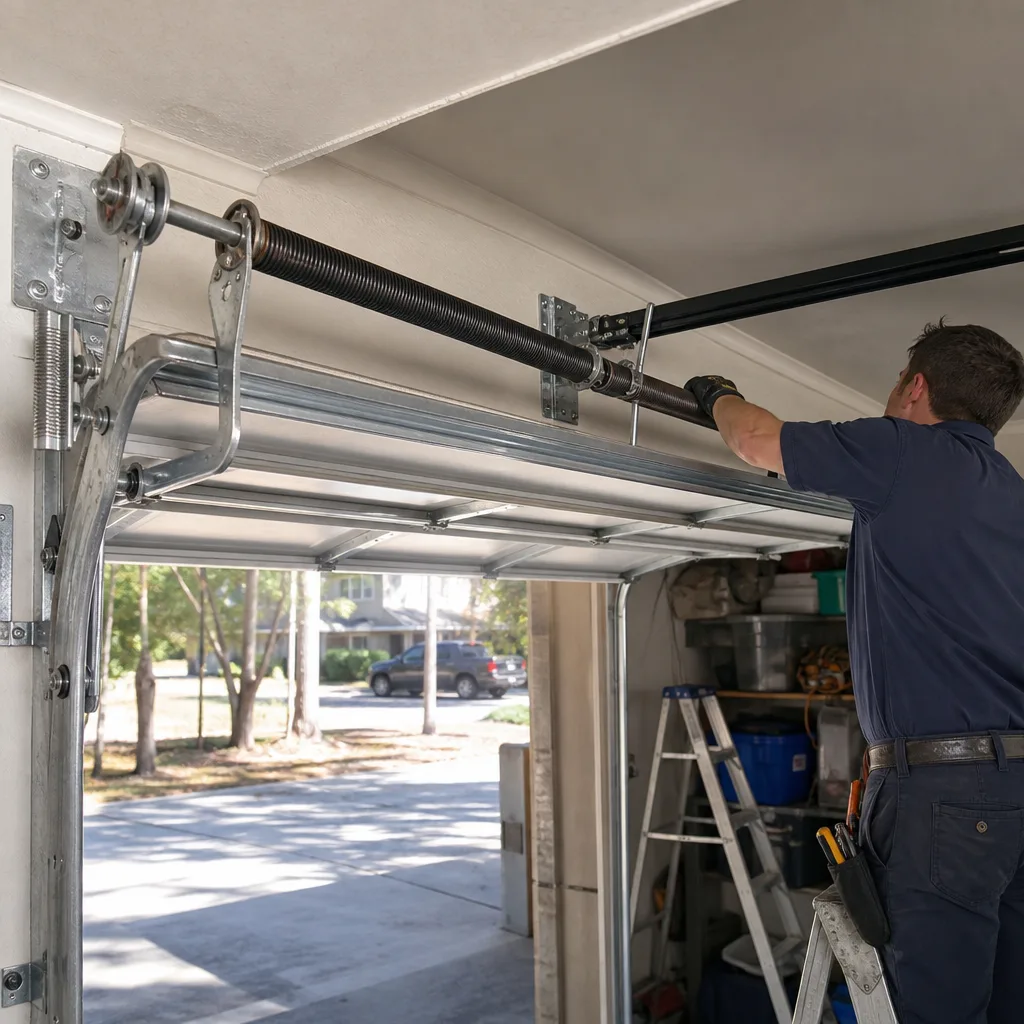 After
After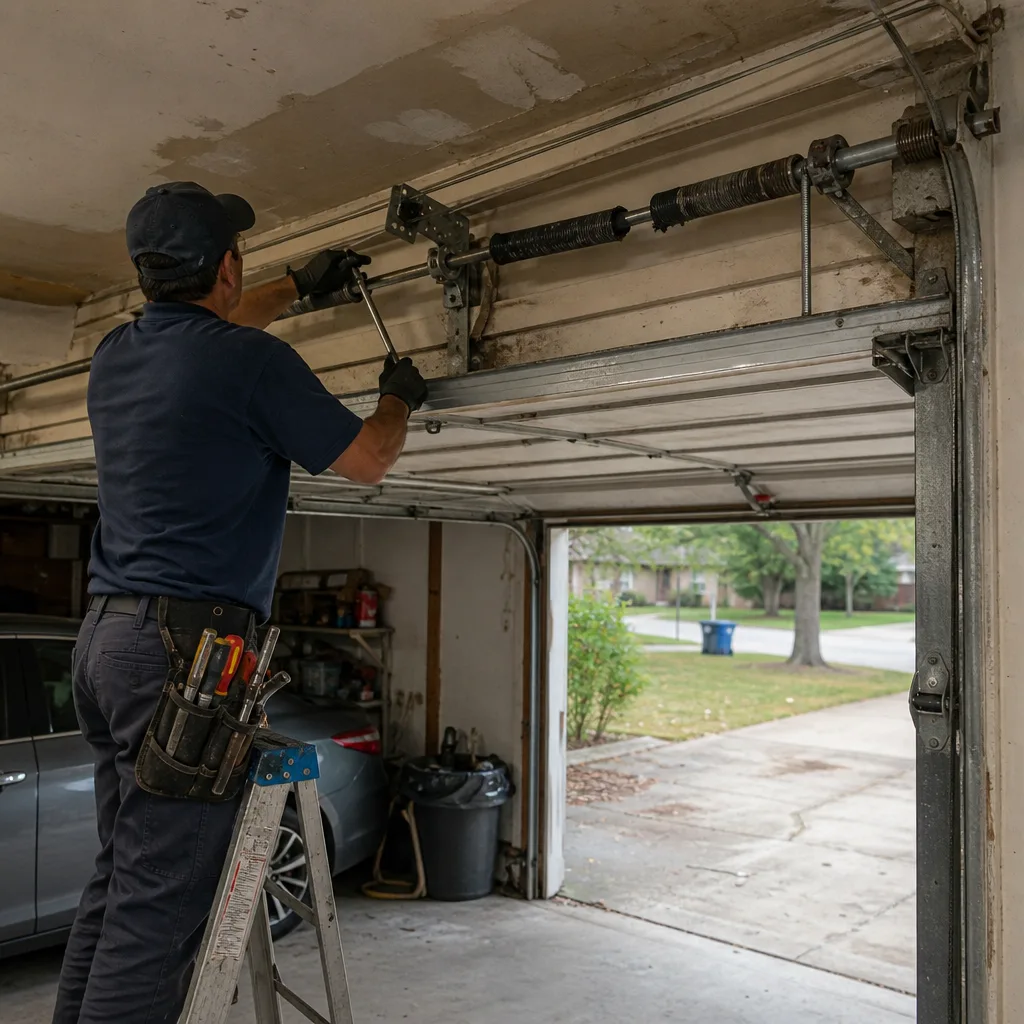 Before
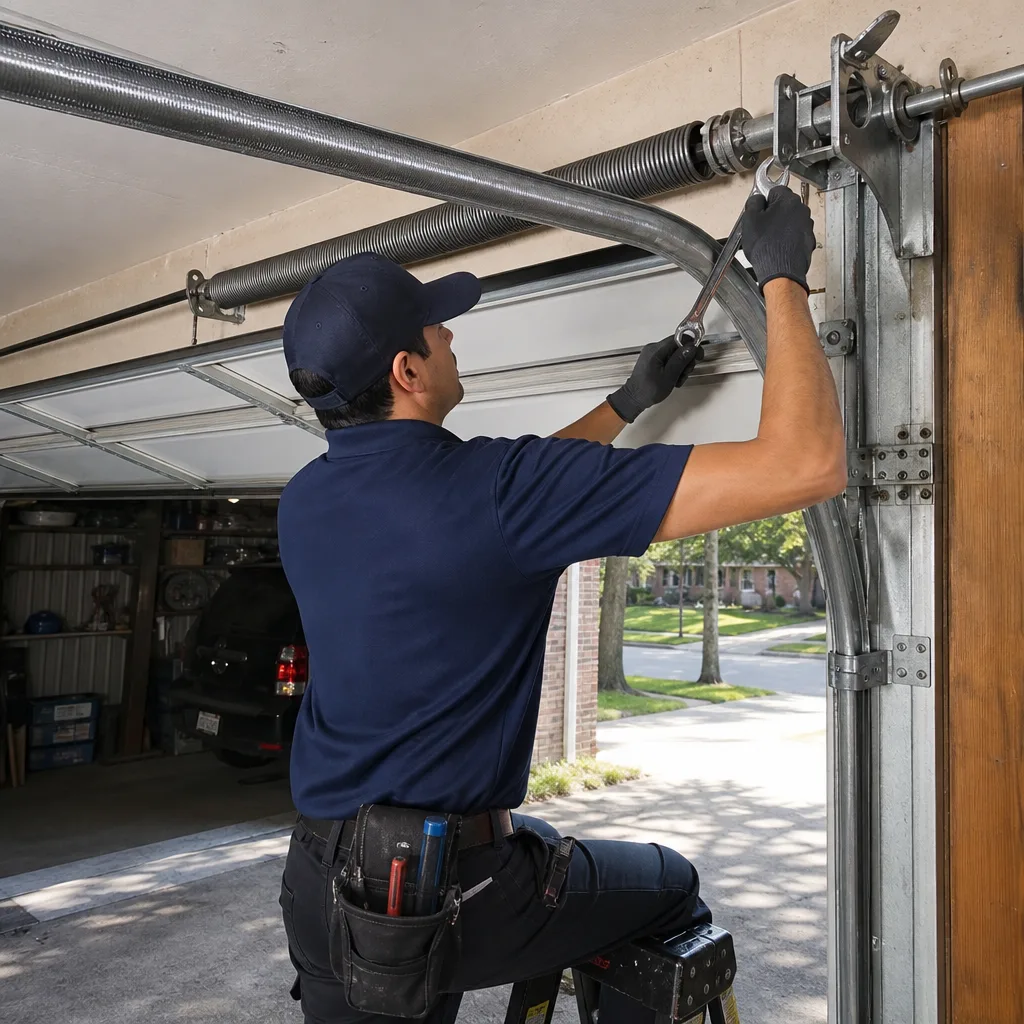 After
AfterSeasonal Garage Door Care for The Woodlands: Year-Round Homeowner’s Guide
The month most garage door springs fail in Southeast Texas is not January. It is October, when overnight temperatures first drop thirty degrees after months of heat-expanded metal cycling. In The Woodlands, we’ve learned that garage door maintenance follows a different calendar than the one printed on seed packets. This guide maps what to do, when to do it, and why the humidity spikes of our shoulder seasons cause more damage than the freeze warnings of our brief winters. For The Complete Guide to Garage Door in The Woodlands, see our companion resource.
Quick Answer
Homeowners in The Woodlands should perform garage door maintenance five times per year: a full inspection in late August before fall temperature swings, a hardware check in October after the first cold snap, a moisture and seal review in March after spring rains, a UV and ventilation check in June, and a safety-system test monthly year-round. Two tasks annually, spring tension adjustment and cable inspection, should be handled by a trained technician due to injury risk.
Table of Contents
- Why Fall, Not Winter, Is the Highest-Risk Season in The Woodlands
- Late August: The Critical Preparation Window
- October: After the First Cold Snap
- March: Managing Spring Rain and Standing Water
- June Through September: Heat, UV, and Opener Strain
- Monthly Safety Checks You Can Do in Ten Minutes
- What to Handle Yourself Versus What Requires a Professional
- Common Mistakes to Avoid
- When to Call a Professional
- Frequently Asked Questions
- The Bottom Line
Why Fall, Not Winter, Is the Highest-Risk Season in The Woodlands
Most homeowners assume garage door springs fail in the dead of winter. That assumption holds in Minneapolis. It does not hold in The Woodlands.
Here is what actually happens. From May through September, torsion springs absorb and release heat daily. Metal expands in the afternoon and contracts overnight, but the range stays within a predictable band. The spring settles into a shape. Then comes October. The first strong cold front drops temperatures from the upper eighties to the fifties in a single night, sometimes in hours. The metal contracts faster and farther than it has in months. Springs that were fatigued but stable suddenly experience stress at angles they have not held since spring.
In our experience across The Woodlands, from Panther Creek to Grogan’s Mill, October and November account for roughly forty percent of our annual spring replacement calls. The failure is not gradual. A homeowner opens the door on a Tuesday morning, hears a sound like a firecracker, and the door slams shut or hangs crooked in the opening.
The humidity spike matters too. October cold fronts in Southeast Texas often carry Gulf moisture that condenses on cooled metal surfaces. A spring with minor surface corrosion from summer sweat suddenly faces accelerated oxidation at the exact moment thermal contraction is testing its crystalline structure.
This pattern reshapes the maintenance calendar. The work that prevents October failures happens in late August and early September, before the front arrives. Waiting until you feel cold air means waiting too long.
Key warning signs we see in The Woodlands homes during this window:
- A door that feels heavier than usual when lifted manually
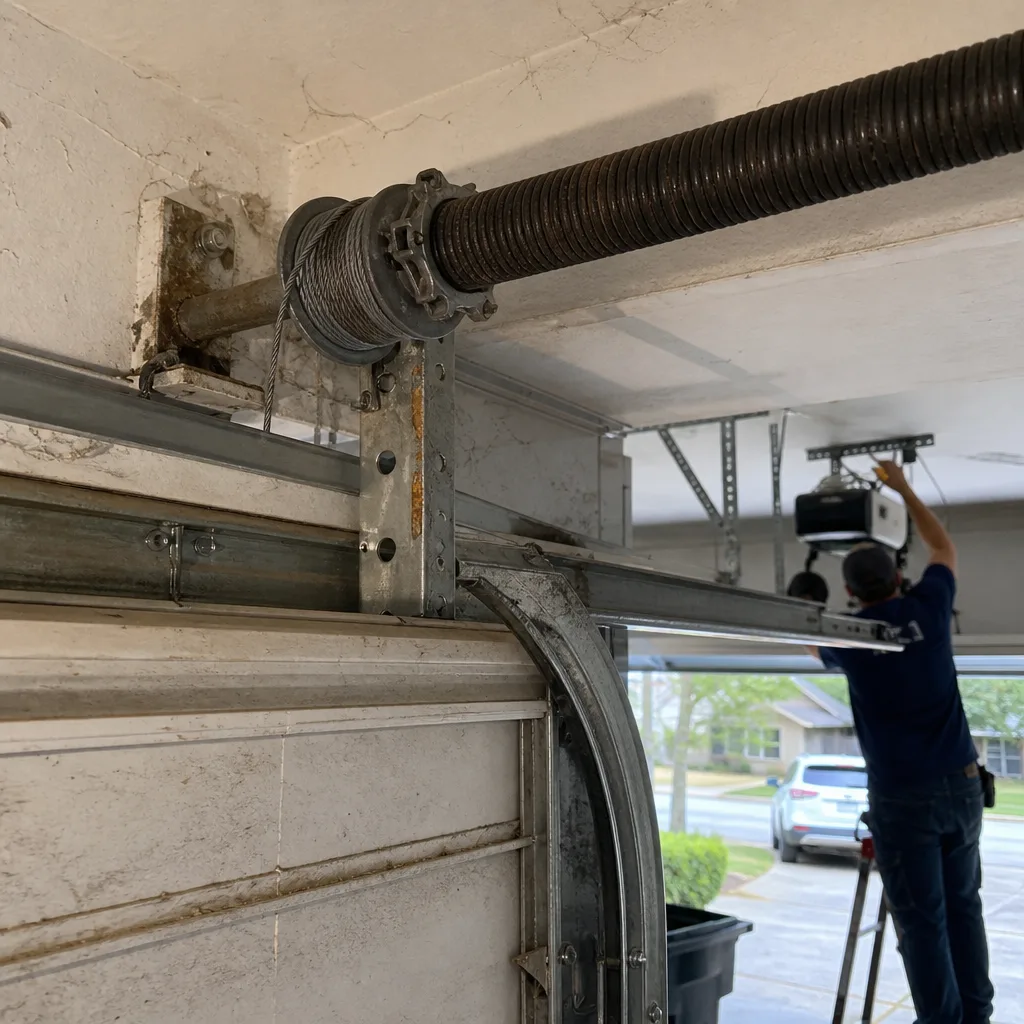
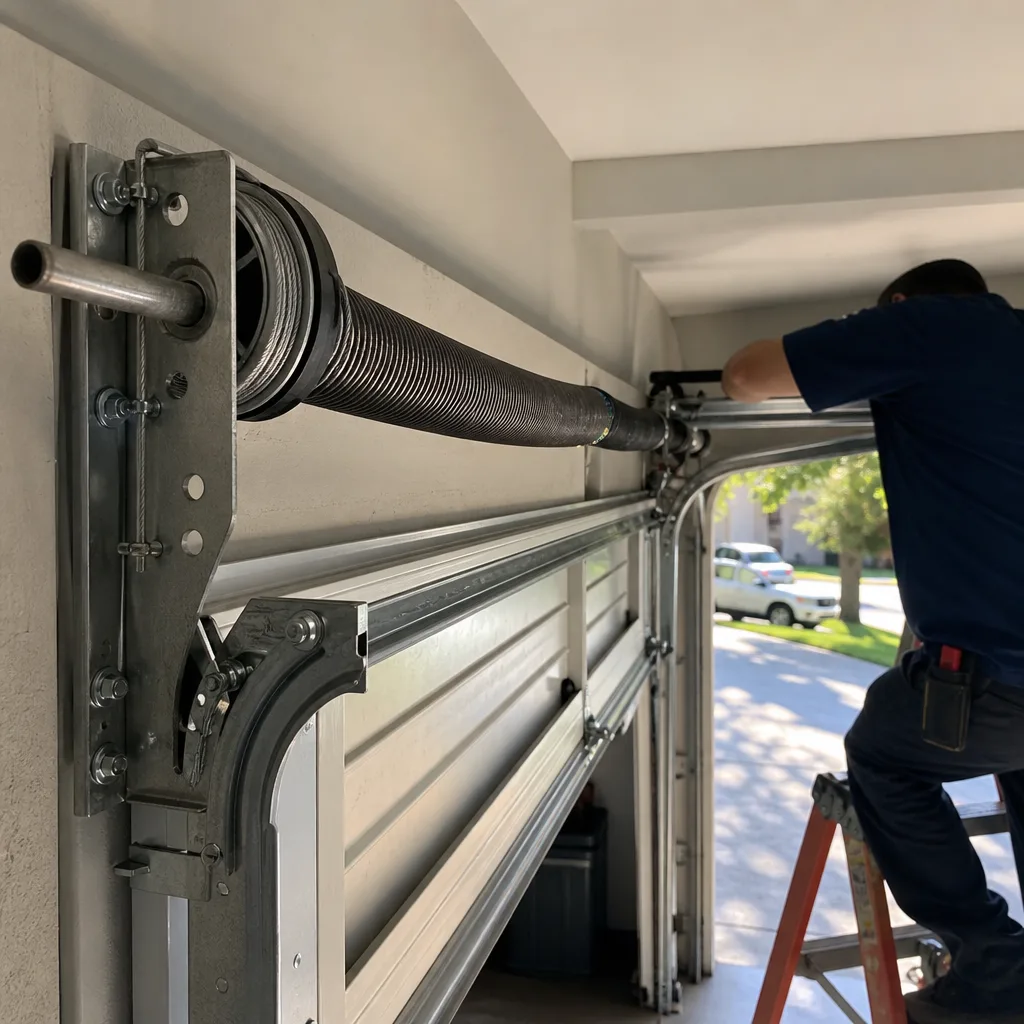
- Visible gaps between coils in a torsion spring, indicating loss of tension
- Rust flakes or orange dust on the spring tube or header
- A door that closes faster than it opens, suggesting uneven spring force
- Squealing or grinding from the spring area that lubrication does not resolve
If you notice these signs in September, the spring is telling you it will not survive the first cold snap. Garage door repair in The Woodlands is straightforward when scheduled; emergency service after a midnight failure is never convenient.
Late August: The Critical Preparation Window
Late August in The Woodlands is still hot. That is precisely why it is the right time to prepare for what comes next. The metal is fully expanded, the lubricants are thinned, and you can observe the system under summer stress before the thermal shock of fall.
We recommend a five-step inspection during the last two weeks of August. Set aside forty-five minutes. Work in the early morning before the garage heats up.
- Disconnect the opener and test balance. Pull the red release handle. Lift the door manually to waist height and let go. A properly balanced door stays put or drifts slowly. If it falls hard or shoots upward, the spring tension is wrong. Do not adjust this yourself. Note the behavior and call for service.
- Inspect the spring for corrosion and coil spacing. Look along the length of the torsion spring. Coils should sit evenly with no visible gaps. Surface rust should be minimal. In The Woodlands, homes near the Woodlands Waterway or within the flood-prone zones of East Shore see faster corrosion due to higher ambient humidity. If you see orange dust collecting on the header or spring tube, corrosion is active.
- Lubricate moving parts with silicone-based spray. Apply a light coat to rollers, hinges, and the spring itself. Avoid WD-40 for this task; it attracts dust and gums up in our heat. Use a product rated for garage door systems. Wipe excess. The goal is a thin film, not a drip.
- Check weatherstripping for summer damage. The bottom seal and side seals take UV punishment from June through August. Look for cracking, hardening, or compression that no longer springs back. A compromised bottom seal in The Woodlands means humidity, pollen, and the occasional snake or frog gain entry. It also means water intrusion during spring and fall storms.
- Test the auto-reverse and photo-eye alignment. Place a 2×4 flat on the floor where the door meets it. The door should reverse on contact. Wave a broom handle through the photo-eye beam during closing; the door should reverse immediately. Heat-expanded tracks can shift photo-eye brackets slightly out of alignment over a summer. Realign if the red indicator light flickers.
This August inspection is the single most valuable preventive step a The Woodlands homeowner can take. It catches fatigue before the October stress test.
October: After the First Cold Snap
Wait three to five days after the first significant cold front passes through Montgomery County. The system needs to cycle through the temperature change before you assess it.
Run the same balance test you performed in August. If the door behavior has changed, the spring has lost tension or the cables have stretched. Document what you observe. A door that was balanced in August but now falls hard has a spring preparing to fail.
October is also when to inspect the opener motor and rail for condensation damage. Cold fronts carrying Gulf moisture leave a film on metal surfaces inside unconditioned garages. Wipe the opener housing dry. Check the rail for surface rust, particularly on older Craftsman or Raynor chain-drive units common in The Woodlands homes built in the 1990s.
The Woodlands Township requires building permits for garage door replacements but not for repair or maintenance. If your October inspection reveals a door that needs replacement, factor permit timing into your schedule. Most permit approvals take three to five business days through the Township Development Standards office.
October tasks for the homeowner:
- Re-test balance and auto-reverse after temperature stabilization
- Inspect all hardware for loosening caused by thermal cycling
- Wipe condensation from opener and rail
- Listen for new noises during opening and closing; metal fatigue often announces itself as a changed pitch
- Schedule professional service if August warning signs have progressed
Our garage door opener in The Woodlands service includes motor ventilation assessment, which is particularly relevant after a humid October front has stressed the electronics.
March: Managing Spring Rain and Standing Water
March in The Woodlands brings the heaviest sustained rainfall of the year. The soil saturates. Driveway slabs settle and shift subtly. Water pools where drainage is imperfect. And garage door bottom panels, particularly on older steel doors, begin the corrosion season.
Standing water on a concrete slab is more damaging than most homeowners recognize. It wicks up into the bottom seal, accelerates rust at the panel’s lower edge, and promotes rot in wooden frame sections. In neighborhoods like Indian Springs and Alden Bridge, where mature tree root systems have shifted driveway grades over decades, water pooling is common and often invisible until you look for it.
March maintenance focuses on moisture management:
- Inspect the bottom panel for rust or delamination. Steel doors show bubbling paint or orange staining. Fiberglass doors may show separation at the bottom edge. Wood doors show soft spots or fungal growth. Catch this early and a panel replacement is possible. Wait, and the damage spreads to adjacent panels or the frame.
- Evaluate driveway drainage. After a heavy rain, observe where water stands relative to the door. If it pools against the bottom seal for more than two hours, improve drainage or add a threshold seal. A threshold seal creates a dam that protects the door but requires the door to clear it during operation; measure carefully before installation.
- Clean and treat the bottom seal track. Remove debris. Apply a rust-inhibiting primer to any exposed metal on the door bottom. For steel doors in The Woodlands, we have seen bottom panel life extend by several years with annual treatment.
- Test the door after rain. Wet tracks increase rolling resistance. A door that strains the opener in dry conditions may stall or overheat when tracks are damp. If you hear the opener laboring, the door needs balance adjustment or roller replacement before the summer heat adds thermal load.
The Clopay and Amarr steel doors installed in many The Woodlands homes from the 2000s forward use galvanized bottom panels that resist corrosion better than earlier generations. But the seal retainer channel, where the rubber inserts, is rarely galvanized and rusts first. Inspect this specific point.
June Through September: Heat, UV, and Opener Strain
Summer in The Woodlands is not a season. It is a condition that lasts four months. Ambient garage temperatures routinely exceed 110 degrees. UV exposure is relentless. And garage door systems absorb punishment that northern climates distribute across a full year.
The opener motor works hardest in July and August. Heat reduces electrical efficiency and accelerates capacitor degradation. In unventilated garages, particularly those facing west with no tree cover, opener lifespans shorten measurably. We replace more opener motors in August than any other month.
Summer-specific tasks:
- Verify opener motor ventilation. The motor housing needs airflow. Clear any storage items stacked within six inches. If your garage has no ventilation, consider a louvered vent or exhaust fan. Overheating is cumulative; a motor that runs hot all summer will fail prematurely in fall when load increases.
- Test auto-reverse sensitivity. Metal tracks expand in heat. The door may ride slightly higher or lower in the opening, changing where it contacts the floor or how the safety sensors align. Test monthly, not seasonally, during summer.
- Inspect bottom seal for UV degradation. Rubber and vinyl seals harden and crack under UV. A seal that was supple in May may be brittle by September. Replace before it loses compression and allows pest entry. The Woodlands has seen increased fire ant and snake activity in garages with compromised seals during summer months.
- Check exterior door finish. Faded or chalking paint on steel doors signals failing topcoat protection. Re-paint or re-coat before rust begins. Wood doors need stain or sealant inspection; our humidity penetrates bare wood rapidly.
- Lubricate again in late June. The August lubrication film has thinned or attracted dust. A mid-summer reapplication keeps rollers and hinges quiet through the heavy-use period.
Wayne Dalton and Clopay doors with factory-applied color finishes hold up well in The Woodlands sun, but the south-facing doors in villages like Sterling Ridge and Carlton Woods benefit from annual waxing with a UV-protective automotive product. This is optional maintenance that extends cosmetic life significantly.
For homeowners considering garage door installation in The Woodlands, summer is the ideal planning season. Measurements and ordering can proceed while the door is functional, and installation scheduled for September before the October rush.
Monthly Safety Checks You Can Do in Ten Minutes
Some tasks belong on a monthly rhythm, not a seasonal one. These protect people and property, and they reveal developing problems before they become emergencies.
- Visual inspection of cables and pulleys. Look for fraying, rust, or broken strands. Do not touch or adjust cables; they are under extreme tension. Note what you see and call if condition worsens.
- Auto-reverse test with a 2×4. Place the board flat on the floor centerline. The door must reverse on contact. If it does not, stop using the door and call for service.
- Photo-eye beam test. Interrupt the beam during closing. The door reverses immediately. Clean lenses with a soft cloth; pollen and dust in The Woodlands obscure beams quickly.
- Manual release test. Verify the red handle disengages the opener smoothly. Lubricate the release mechanism if it sticks.
- Listen for changed sounds. A new rattle, squeal, or grinding indicates something has shifted or worn. Early identification prevents cascade failures.
Set a phone reminder for the first Saturday of each month. Ten minutes is sufficient. These checks are not a substitute for seasonal maintenance, but they catch the exceptions that seasons miss.
What to Handle Yourself Versus What Requires a Professional
We believe in straight talk about what homeowners can safely do and what risks injury or worse. The dividing line is clear: anything under spring or cable tension requires training and proper tools.
Homeowner tasks, under one hour annually:
- Lubrication of rollers, hinges, and the spring surface (not adjustment)
- Weatherstripping inspection and replacement
- Photo-eye cleaning and alignment
- Auto-reverse testing
- Visual inspection of all hardware for looseness or damage
Professional tasks, annually:
- Spring tension measurement and adjustment
- Cable inspection and replacement
- Track alignment and roller replacement
- Opener force-limit calibration
- Full system balance verification with precise tools
Torsion springs store enough energy to cause serious injury or death if mishandled. Every year, emergency rooms in the Houston metro see homeowners who attempted DIY spring work. The risk is not theoretical. In The Woodlands, where many homeowners are experienced with home maintenance, the confidence can become dangerous. We have responded to calls where a well-intentioned repair attempt made the problem worse and more expensive.
Our $89 Seasonal Tune-Up covers the professional tasks in a single visit. A technician arrives with springs, cables, and rollers on the truck. Most tune-ups are completed in under an hour. The price is stated before work begins. There are no surprises on the bill.
Common Mistakes to Avoid
- Treating The Woodlands like a four-season climate. Applying a national maintenance calendar means missing our specific risk windows. August preparation and October vigilance matter more than winterizing.
- Using the wrong lubricant. WD-40 and general-purpose oils attract dust and gum up in heat. Use silicone-based or lithium-grease products rated for garage door systems.
- Ignoring the bottom seal until water enters. By the time you notice water, the panel edge is already compromised. Inspect seals in June and March, not after a storm.
- DIY spring adjustment after watching a video. Online tutorials rarely mention the specific spring setup for your door weight and track configuration. The Woodlands homes have a mix of standard-lift, high-lift, and vertical-lift systems depending on ceiling height. Guessing is dangerous.
- Delaying service until the door fails completely. A spring with a visible gap or a cable with three frayed strands will fail. The only question is when. Scheduling on your terms is always preferable to emergency service.
- Neglecting opener ventilation in summer. A motor that overheats repeatedly suffers capacitor damage that manifests as intermittent operation. By the time you notice, the motor or logic board is failing.
- Assuming a new door needs no maintenance. Even a properly installed Clopay or Amarr door requires seasonal attention to seals, hardware, and safety systems. Warranty coverage does not extend to damage from neglected maintenance.
When to Call a Professional
Call when you observe any of the following: a door that will not stay open manually, visible gaps in the torsion spring, frayed cables, a door that closes faster than it opens, an opener that hums but does not move the door, or any auto-reverse failure. These are not maintenance items. They are safety concerns.
Also call if your door is more than fifteen years old and has never had professional service. The Woodlands has homes built across four decades with original doors still in service. Age alone is not a reason to replace, but age without inspection is a reason to assess.
Mainspring Garage Door Co. home service includes free estimates in The Woodlands. Call (346) 682-0797. A live person answers, including nights and weekends. We arrive with the parts to complete most jobs in a single visit. The price is quoted and agreed before any work starts. Our 90-Day Done Right Promise covers every completed job in writing.
Frequently Asked Questions
For a detailed Garage Door Cost Breakdown: The The Woodlands Homeowner’s Reference for 2026, see our pricing guide. Professional seasonal tune-ups in The Woodlands typically run $89 to $180 depending on door size and system complexity. Mainspring Garage Door Co. offers a $89 Seasonal Tune-Up that includes spring tension check, cable inspection, hardware tightening, lubrication, and safety system testing. Call (346) 682-0797 for an exact quote - estimates are free.
Homeowners can safely handle lubrication, weatherstripping replacement, photo-eye cleaning, and monthly safety testing. Spring tension adjustment, cable work, and track realignment should be performed by a trained technician due to serious injury risk. In The Woodlands, where humidity accelerates hardware corrosion, professional inspection annually catches what visual checks miss.
October brings the first sharp temperature drop after months of thermal expansion. Metal contracts rapidly, stressing fatigued springs. The accompanying humidity spike from Gulf moisture adds corrosion pressure. In The Woodlands, this combination produces more spring failures than the mild mid-winter cold.
Inspect annually and replace when you see cracking, hardening, or compression loss. In The Woodlands, UV exposure and summer heat typically degrade bottom seals every two to three years. Homes with direct west exposure or poor garage ventilation may need more frequent replacement.
No. Mainspring Garage Door Co. states the flat price before any work begins. If inspection reveals additional issues, we explain and quote separately. You approve everything before we proceed. There are no surprises on the bill.
Yes. Our technicians arrive with springs, cables, rollers, openers, and hardware for all major brands including LiftMaster, Chamberlain, Genie, Clopay, Amarr, Wayne Dalton, Craftsman, and Raynor. Most repairs are completed in a single visit. If a specialty part is needed, we order it and return at no additional trip charge.
The Bottom Line
The Woodlands climate demands a maintenance calendar built around heat, humidity, and sudden temperature change, not a generic four-season template. The critical months are August, before fall thermal shock, and March, after spring rain saturation. Homeowners can handle lubrication, seal inspection, and safety testing safely. Spring and cable work belongs to trained professionals. Consistent attention prevents the October failure surge and extends system life by years. The goal is simple: a door that opens and closes reliably, season after season, with no surprises. Explore more guides & resources on maintaining your garage door in The Woodlands climate.
Written by Carl Dutton, Owner at Mainspring Garage Door Co., serving The Woodlands since 2016.