
Last updated September 10, 2026
Full 25-point door and opener safety check with every visit - springs, cables, rollers, tracks, and your LiftMaster or Chamberlain opener included
You get a price before we start. It does not change when the truck arrives.
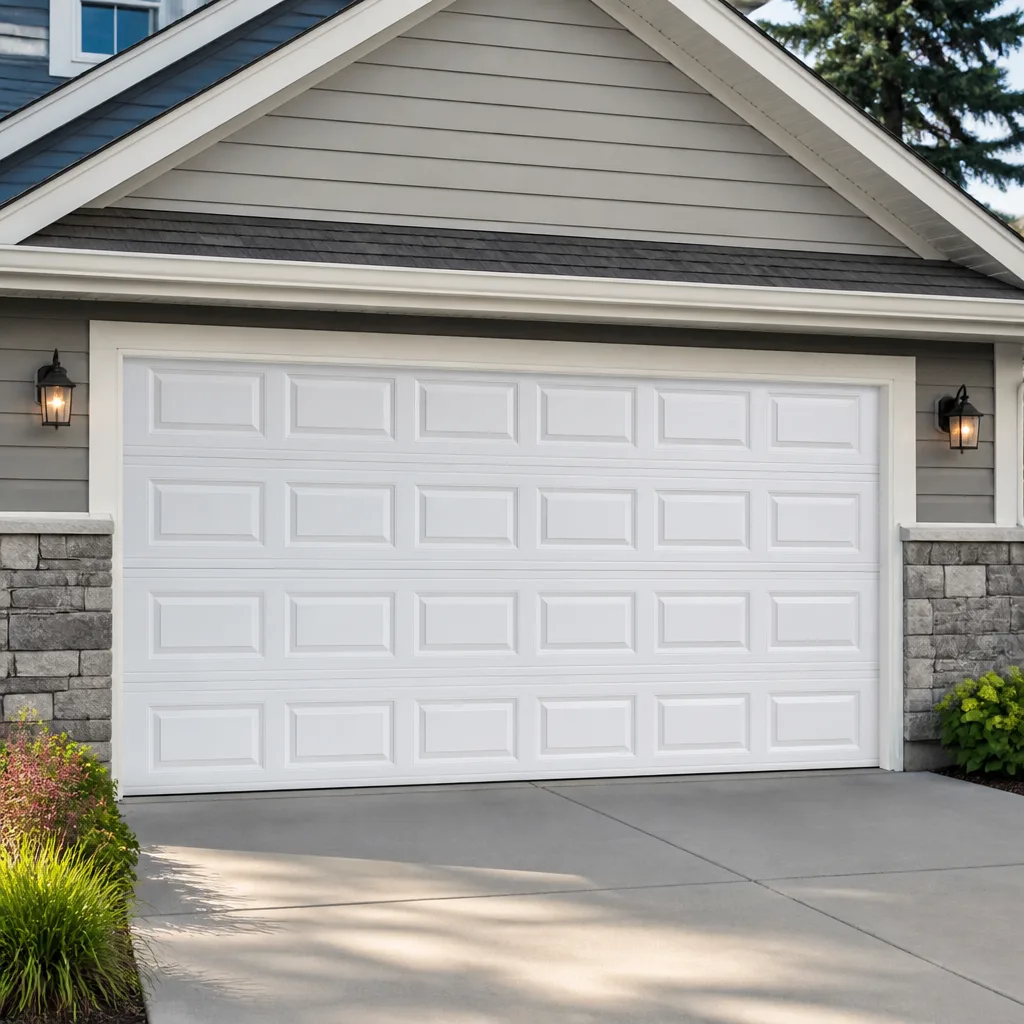
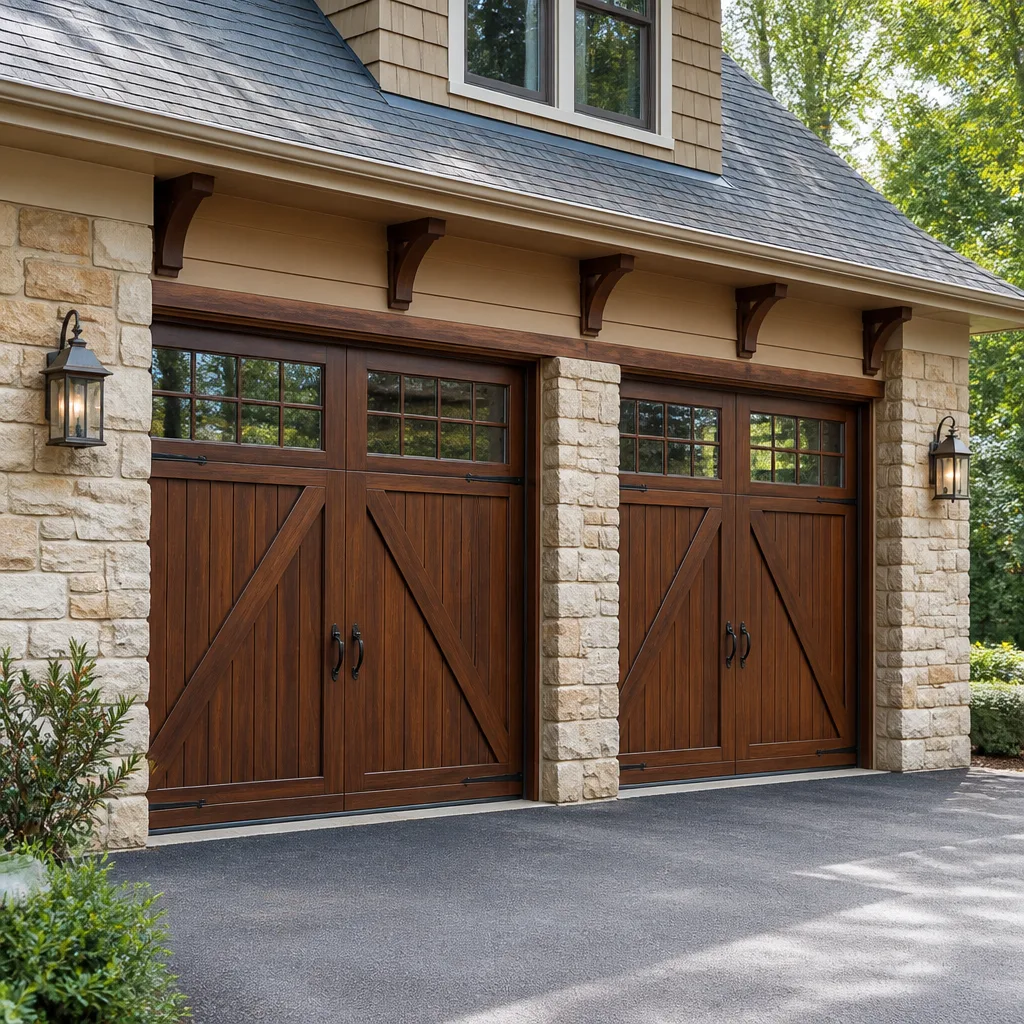
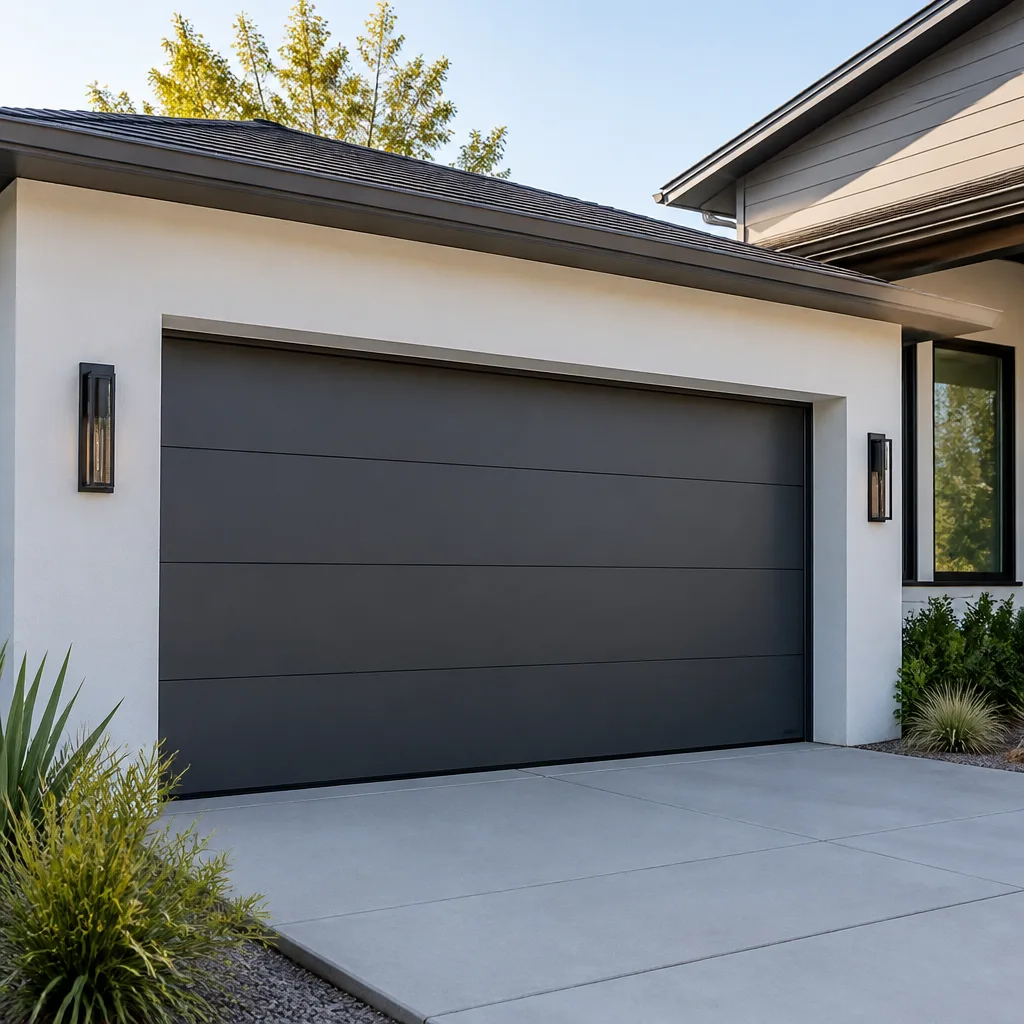
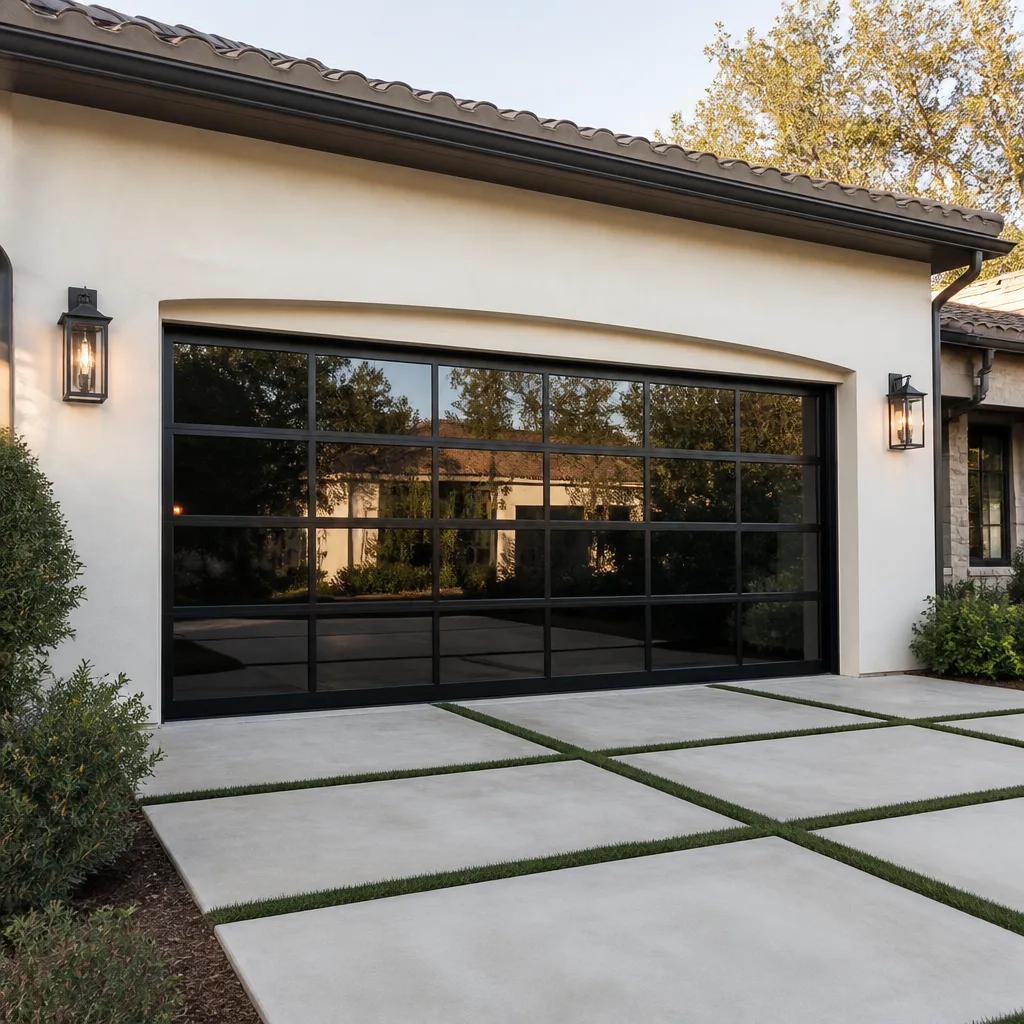
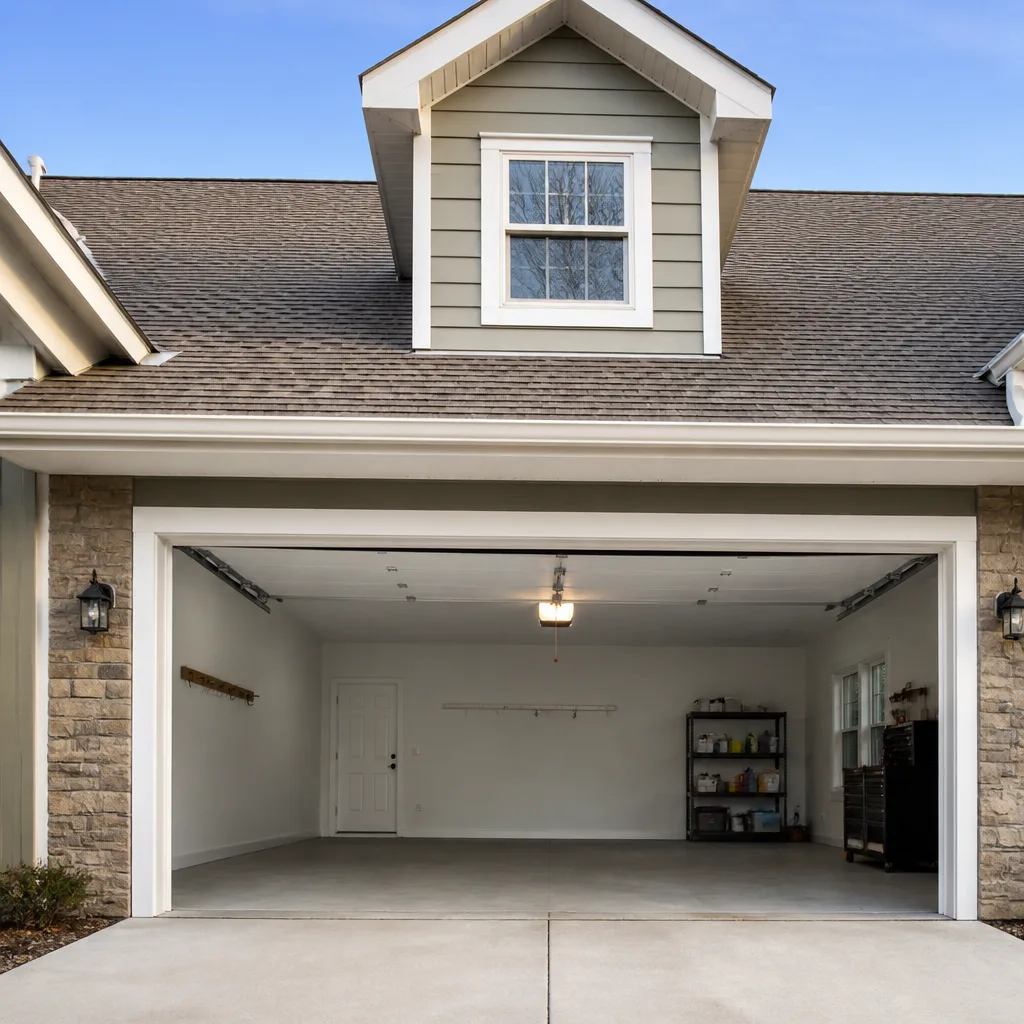
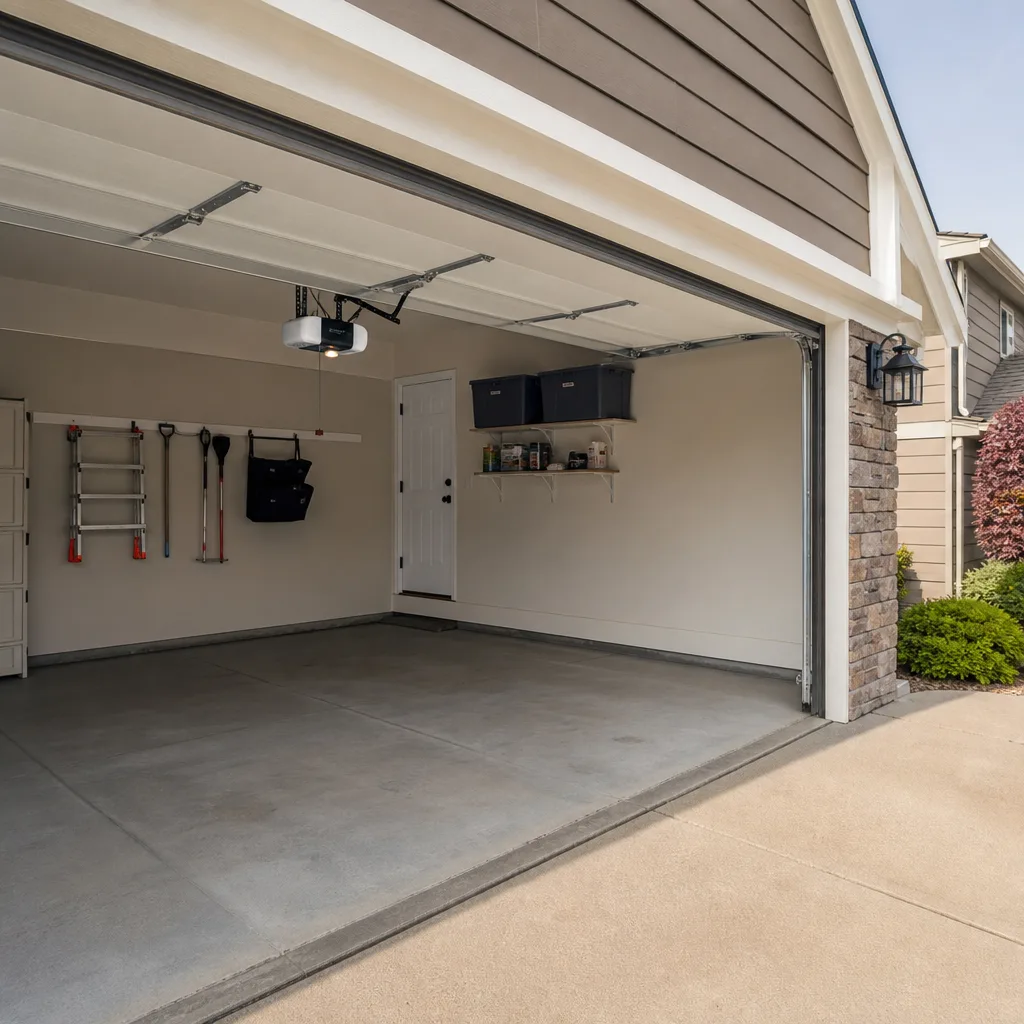
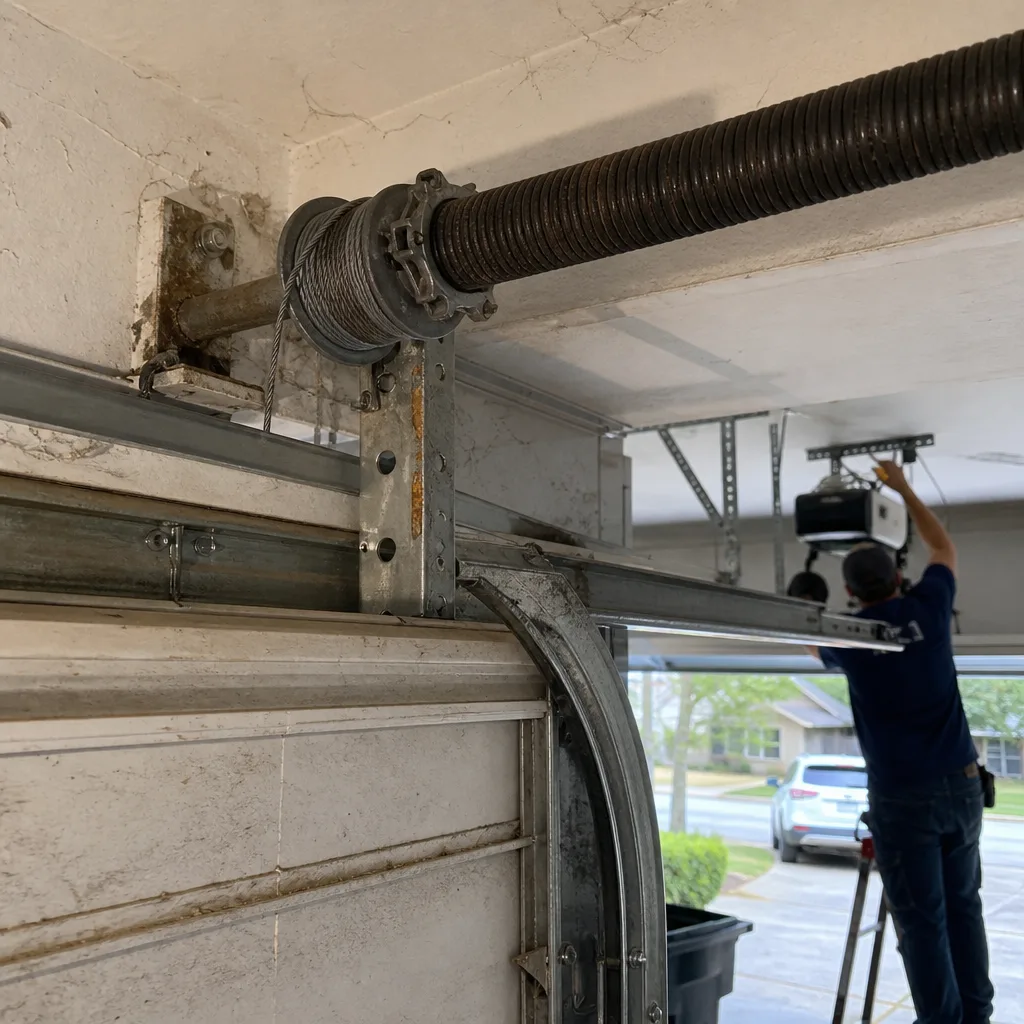 Before
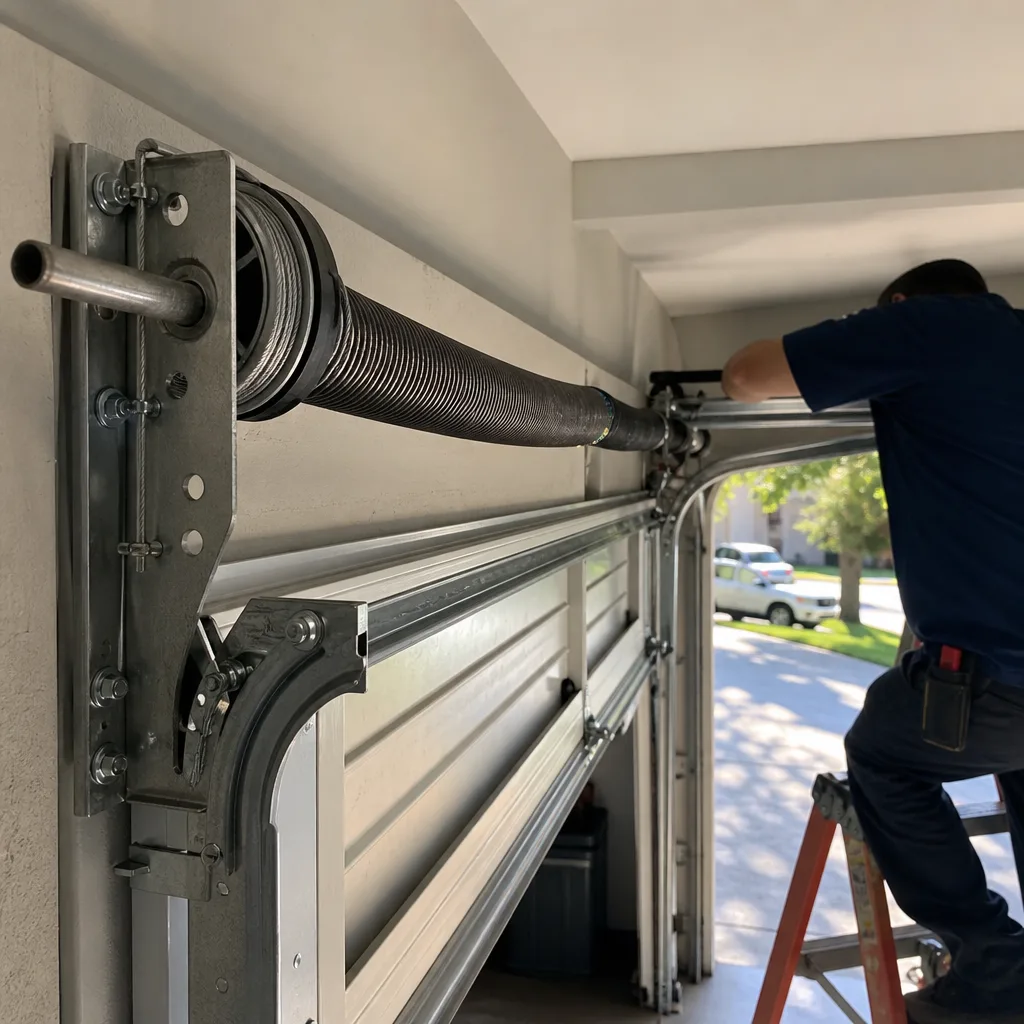 After
After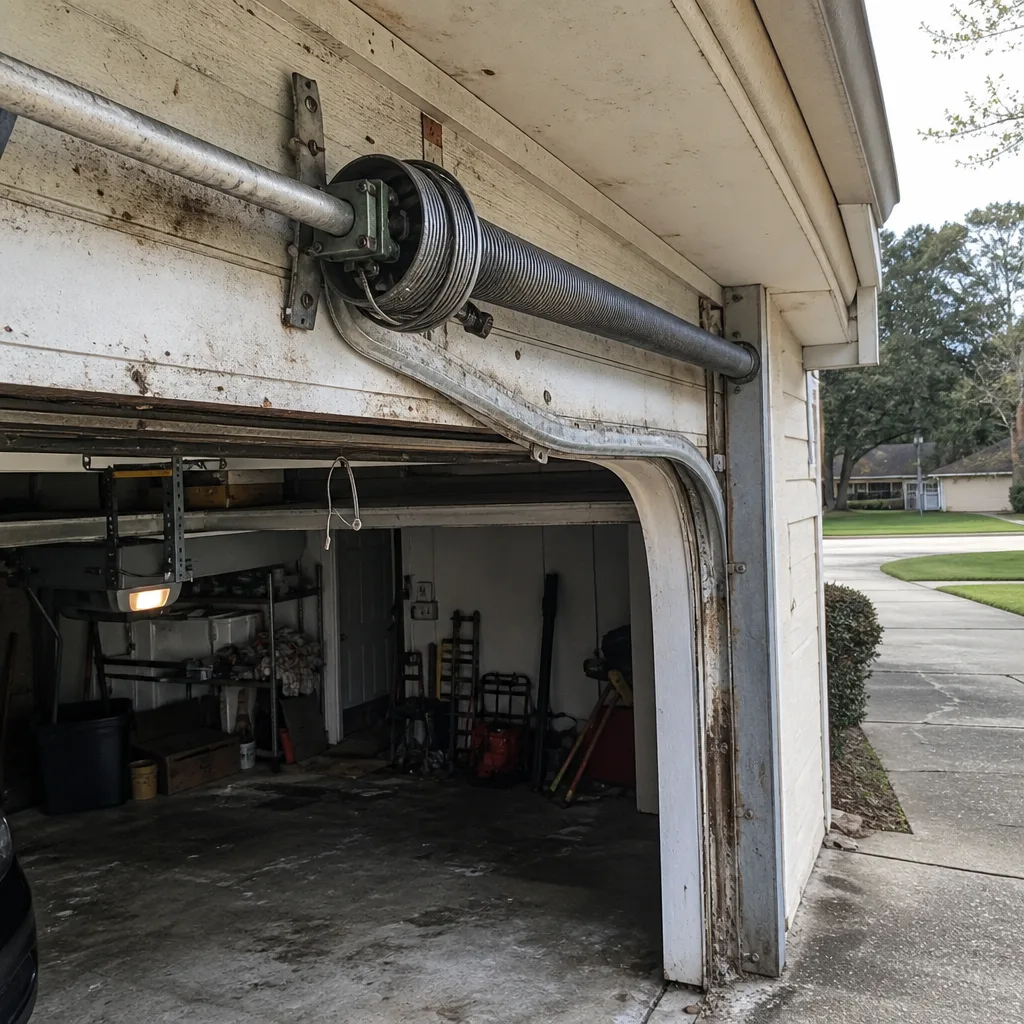 Before
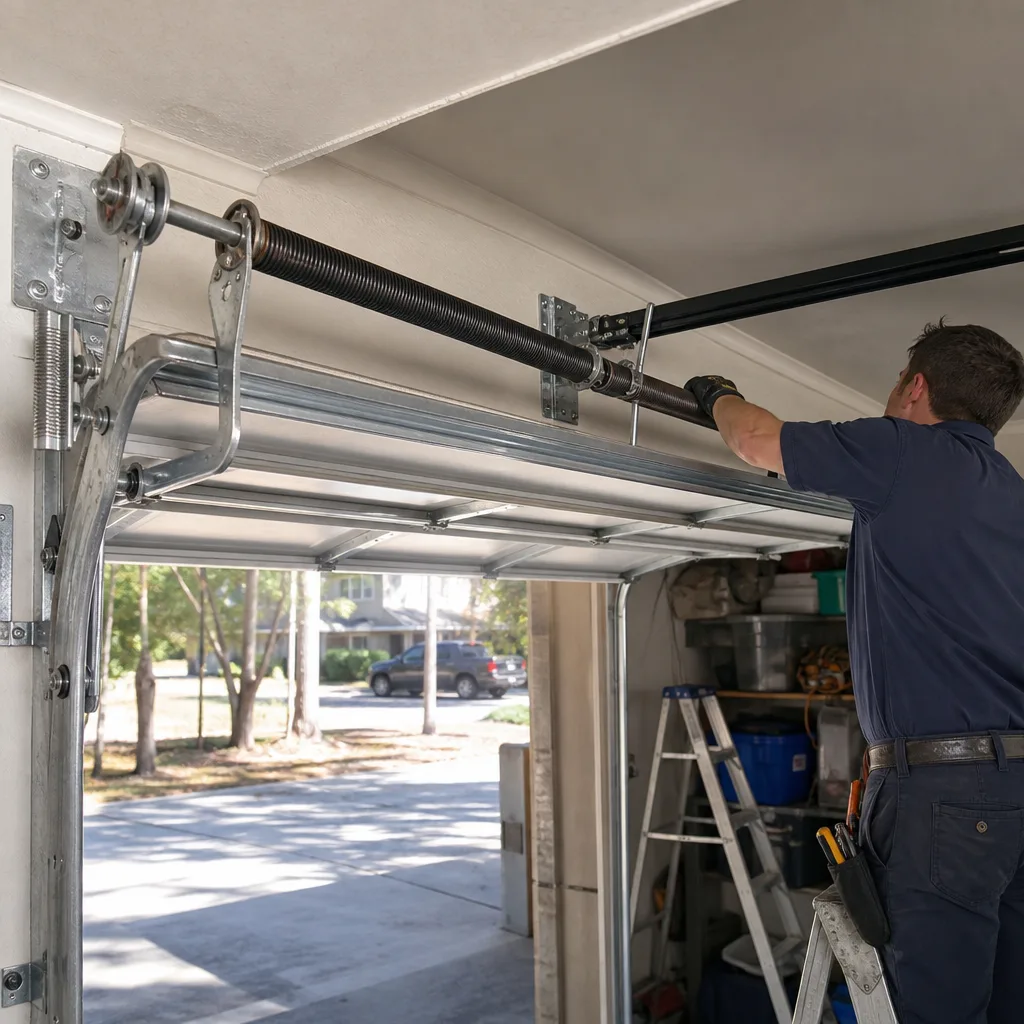 After
After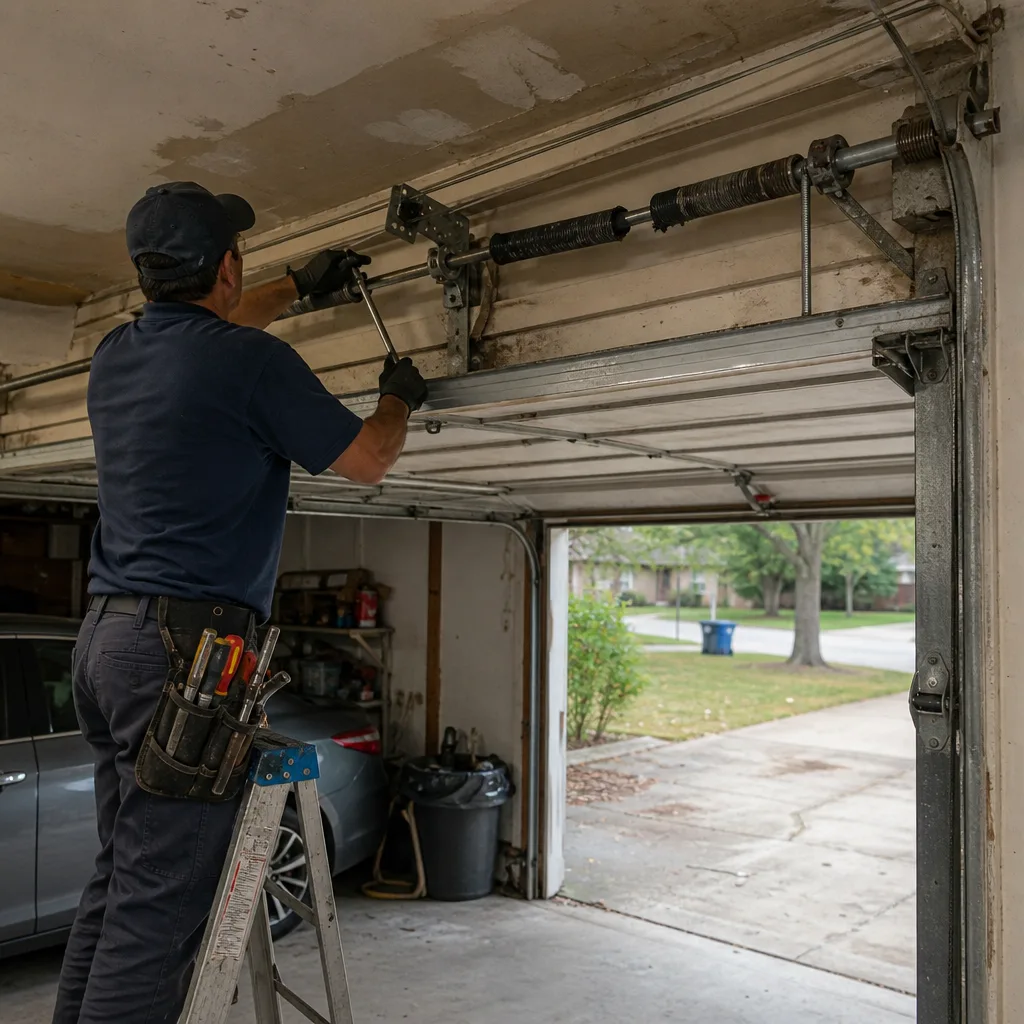 Before
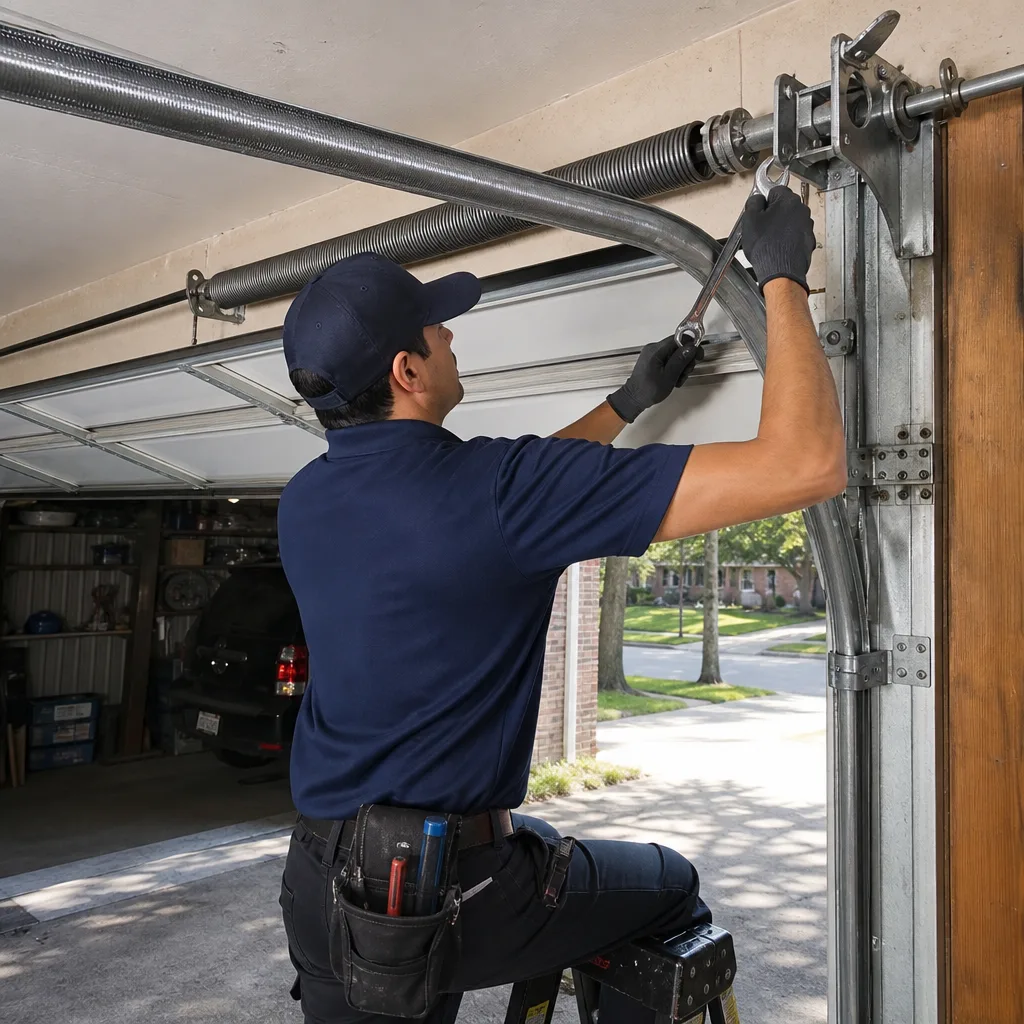 After
AfterThe Complete Guide to Garage Door in The Woodlands
The Woodlands gets roughly 50 inches of rain a year - nearly double the national average - yet most garage door guides were written for Phoenix or Denver. Material choices that work in dry climates rot, warp, or corrode here within a few years. In this guide and our more guides & resources, we’ll walk through every decision a homeowner in The Woodlands actually faces: which materials survive our humidity, how Village HOA rules affect your options, what slab foundations mean for installation, and how to read a warranty so you know what’s really covered. Whether you’re replacing a failing door or choosing your first one, this is the information written for your specific address, not a generic climate zone.
Quick Answer
A garage door in The Woodlands should be selected for high-humidity performance, measured against your specific Village’s HOA guidelines, and installed with proper header clearance for slab-on-grade foundations. Steel doors with baked-on polyester or vinyl coatings, paired with a 3/4 HP opener for longer driveways, typically deliver the longest service life in this climate. For a detailed breakdown, see our Garage Door Cost Breakdown: The The Woodlands Homeowner’s Reference for 2026; expect to invest $1,200-$3,800 for a complete replacement, depending on size, insulation, and custom panel requirements.
Table of Contents
- How The Woodlands Climate Affects Garage Door Materials
- Village HOA Rules That Shape Your Choices
- Slab Foundations and Header Clearance Challenges
- Steel, Wood, or Composite: A 10-Year Comparison
- Choosing the Right Opener for The Woodlands Lots
- What a Written Warranty Should Actually Cover
- Seasonal Maintenance for Humid Climates
- Realistic Costs and What Drives Them
How The Woodlands Climate Affects Garage Door Materials
Most garage door failures in The Woodlands trace back to one cause: moisture finding its way past the surface. Our combination of Gulf Coast humidity, sudden temperature swings, and driving spring rains creates stress that dry-climate doors simply weren’t engineered to handle.
Here’s what happens season by season. From March through October, relative humidity hovers between 70 and 90 percent. That moisture penetrates unsealed wood, condenses on uncoated steel hardware, and degrades weatherstripping faster than manufacturers’ national averages assume. Then a cold front drops temperatures 30 degrees in six hours, and any trapped moisture expands and contracts with enough force to crack paint, separate joints, and fatigue spring coils.
We’ve seen this pattern repeatedly in neighborhoods like Panther Creek and Indian Springs. A homeowner installs a beautiful natural wood carriage door. By year three, the bottom panels are swelling at the joints. By year five, the hardware is rusting despite regular use. The door still functions, but the repair costs start compounding.
The specific risks by material:
- Unfinished or stained wood: Absorbs moisture through end grain and panel edges; requires resealing every 12-18 months in The Woodlands to prevent rot
- Standard painted steel: Scratches or factory coating flaws expose bare metal; surface rust appears within 2-3 years without prompt touch-up
- Aluminum frames with glass inserts: Thermal expansion stresses corner joints; seal failure allows condensation between glass layers
- Vinyl or composite overlays: Generally resist moisture well, but substandard products fade or chalk under intense summer UV
The practical implication: your material choice should be rated for “coastal” or “high-humidity” applications even though The Woodlands is inland. The air mass is the same.
Village HOA Rules That Shape Your Choices
The Woodlands is not one community. It’s a collection of Villages, each with its own Architectural Control Committee and published design standards. Install a door that violates those standards or Garage Door Permits, Codes & Inspections in TX: What You Need to Know, and you may be required to remove it at your own expense. We’ve been called to fix this exact situation twice in the past three years.
The restrictions typically cover:
- Color palette: Most Villages maintain approved color lists - often earth tones, muted greens, tans, and specific white shades. Bright reds, blues, or black doors are frequently prohibited or require individual review.
- Panel style: Raised-panel, recessed-panel, or carriage-house designs may be mandated or restricted depending on your Village’s architectural theme. Grooved or flush contemporary panels are increasingly accepted in newer sections but rejected in established neighborhoods.
- Window placement and glazing: Many committees regulate the number of window rows, glass type (clear, frosted, or obscure), and whether windows may appear in the top section only or extend lower.
- Material appearance: Some Villages require wood-grain texture or prohibit smooth finishes that read as “industrial” from the street.
- In Alden Bridge, carriage-house designs with decorative hardware are encouraged for street-facing garage doors; contemporary flush panels require a variance request.
- Cochran’s Crossing maintains strict limits on window percentage per door section to preserve uniform streetscapes.
- Creekside Park newer builds often require builder-grade matching for any replacement within the first five years.
- Sterling Ridge has specific prohibitions against high-gloss finishes that create glare for neighboring properties.
- Standard headroom is often tight. Many The Woodlands homes built in the 1980s and 1990s were designed with 8-10 inches of headroom above the door opening. Modern insulated doors with standard track systems require 12-15 inches. A low-headroom track conversion adds cost and slightly reduces door travel.
- Garage floor settling is common. Clay soils throughout Montgomery County expand and contract with moisture. Over twenty years, a slab may shift enough that the door opening is no longer perfectly square. We measure diagonals on every replacement job; anything beyond 1/2 inch out of square requires frame adjustment before the new door will seal and operate properly.
- Threshold drainage matters. Slab garages without perimeter drainage can experience water pooling at the door during heavy rain. The original builder’s seal may have degraded. We assess whether a new aluminum threshold, improved weatherstripping, or minor concrete grading is needed as part of the installation scope.
- Doors larger than 8×7 feet (common for two-car garages in newer The Woodlands construction)
- Insulated or solid wood doors weighing over 150 pounds
- Driveway runs exceeding 22 feet where the door is fully open before a vehicle clears the threshold
- Homes where the opener will cycle 4+ times daily
- Parts and labor, or parts only? A 10-year parts warranty with no labor coverage means you pay for the technician’s time when that spring fails in year four. We see this structure frequently from low-bid installers.
- Spring coverage specifics. Torsion springs are wear items. Some warranties exclude them entirely after 90 days. Others prorate based on cycle count. A quality warranty covers spring replacement for at least 3-5 years without proration.
- Transferability. If you sell your home, does the warranty transfer to the new owner? Non-transferable warranties expire at closing, effectively reducing their value if you move within the coverage period.
- Response commitment. “Covered” means little if the contractor takes three weeks to schedule. The warranty should specify response time for non-emergency repairs.
- Exclusions for “acts of nature” or “improper maintenance.” These clauses are so broadly written that humidity damage, power surge, or even normal wear can be disputed. Read the specific exclusion language.
- Inspect weatherstripping for winter brittleness and spring storm damage; replace if cracked or daylight-visible
- Lubricate torsion springs, rollers, and hinges with silicone-based lubricant (not WD-40, which attracts dust)
- Test auto-reverse safety sensors; clean lenses of pollen accumulation
- Check drain paths around garage threshold; clear debris before heavy rain season
- Inspect steel door bottom edges and hardware for early rust; touch up with manufacturer-matched paint
- Verify opener thermal overload hasn’t tripped during extreme heat; ensure ventilation around motor unit
- Check wood doors (if applicable) for seal integrity; reseal if water no longer beads on surface
- Full hardware inspection after peak storm period; tighten bolts, check cable fraying, verify spring tension balance
- Replace weatherstripping if compressed or torn from summer heat cycling
- Schedule professional tune-up before holiday travel season
- Test battery backup on opener; cold reduces battery capacity
- Verify door balance: disconnect opener and lift manually; should stay at mid-point without drifting
- Inspect for pest intrusion at bottom seal; cooler weather drives rodents to seek shelter
- HOA compliance work: Documentation, variance applications, and color-matching to existing streetscape can add $150-$400 to project management time
- Slab foundation adjustments: Low-headroom track kits, header reinforcement, or concrete threshold work add $200-$600
- Wind load requirements: Montgomery County requires wind-rated doors for new construction and replacement in some zones; W6 or W9 rating adds 15-25% to base door cost
- Same-day urgency: Emergency response for a door off-track or broken spring is available, but scheduled replacement work is measured, ordered, and installed with proper lead time
Specific examples we’ve encountered:
Before you select any door, request your Village’s current Architectural Guidelines in writing. Submit your proposed model, color swatch, and any window configuration for pre-approval. Most committees respond within 10-14 business days. The small delay prevents a costly mistake.
We handle this paperwork routinely for garage door installation in The Woodlands and can advise on which manufacturers’ product lines have historically gained approval in specific Villages.
Slab Foundations and Header Clearance Challenges
The Woodlands developed rapidly from the 1970s through the 2000s, and much of that construction used slab-on-grade foundations. This affects garage door installation in a specific, measurable way: header height and rough opening dimensions.
On a slab foundation, the garage floor sits directly on compacted earth with no basement or crawl space below. The header - the structural beam above the door opening - must carry roof and wall loads without the intermediate support that a stem wall or pier foundation might provide. In practice, this means:
In Grogan’s Mill and Panther Creek, we’ve found that homes from the 1980s frequently need header reinforcement or low-headroom hardware to accommodate modern energy-efficient doors. This isn’t a flaw in the home. It’s a mismatch between original construction standards and current product dimensions. A proper site measure identifies this before any materials are ordered.
Never accept a phone quote for door replacement in The Woodlands without a physical measure of your opening, floor level, and headroom. The variables are too specific to guess.
Steel, Wood, or Composite: A 10-Year Comparison
We’ve installed and serviced all three material types across The Woodlands for over four decades. Here’s how they actually perform in our climate, with real cost and maintenance expectations.
Steel Doors (Most Common)
Steel dominates the market for good reason. A 24- or 25-gauge steel door with a baked-on polyester or vinyl coating resists denting, won’t rot, and requires minimal maintenance. In The Woodlands, the critical specification is the coating quality, not the steel thickness alone.
Entry-level steel doors often carry a single-layer painted finish. Within 3-4 years, scratches at the bottom edge or around hardware penetrate to bare metal. Surface rust follows. Premium steel doors from Clopay or Amarr use multi-layer coating systems with galvanized substrate and vinyl or composite overlays that seal edges against moisture intrusion.
10-year outlook: A quality steel door with proper coating shows minimal degradation beyond normal wear. Budget steel doors in The Woodlands typically need panel replacement or significant rust remediation by year 6-8.
Price range installed: $1,100-$2,400 for standard sizes; $2,800-$3,800 for insulated, wind-rated, or custom-embossed models.
Wood Doors (High Maintenance, High Character)
Natural wood - typically cedar, redwood, or mahogany - offers unmatched appearance and can be custom-crafted to any HOA requirement. The tradeoff is relentless maintenance in our climate.
We’ve observed that wood doors in The Woodlands require complete resealing every 12-18 months. Skip a cycle, and moisture penetrates end grain at panel joints and bottom rails. By year 3-4, delamination begins. By year 7, structural panel replacement is often needed. Hardware corrosion accelerates because wood holds moisture against metal surfaces longer than steel or composite skins.
10-year outlook: Possible with disciplined maintenance, but total cost of ownership often exceeds premium steel by 40-60%. Most homeowners who choose wood in The Woodlands either commit to the maintenance schedule or plan for earlier replacement.
Price range installed: $2,500-$5,500 depending on species and custom millwork.
Composite and Fiberglass (Emerging Alternative)
Composite doors - fiberglass skins over steel or composite frames - attempt to combine wood appearance with moisture immunity. Early generations had UV-fading problems, but current products from major manufacturers have improved significantly.
In our experience, composites perform well in The Woodlands humidity but vary in impact resistance. A basketball or ladder bump that dents steel may crack fiberglass. Repairs are more involved than steel panel replacement.
10-year outlook: Good color stability and moisture resistance, but monitor for surface cracking at stress points. Slightly shorter track record locally than steel.
Price range installed: $1,800-$3,200.
Insulation: R-Value in Texas Context
Manufacturers promote R-values from 6 to 18+. In The Woodlands, where garage temperatures rarely drop below 40°F even in January, the practical benefit of ultra-high R-value is limited. We typically recommend R-6 to R-9 for attached garages with living space above, and R-4 to R-6 for detached or unconditioned garages. The payback on premium insulation in this climate is 12-15 years - longer than many homeowners stay in the home.
Choosing the Right Opener for The Woodlands Lots
Opener selection in The Woodlands should account for two local factors: driveway length and ceiling height. Many Villages, particularly Creekside Park and Sterling Ridge, feature deeper lots with 25-35 foot driveway runs from street to garage. Standard 1/2 HP openers strain under this load, especially with heavier insulated doors.
Motor Sizing: The Real Difference
A 1/2 HP opener moves a standard non-insulated steel door reliably on a typical 18-20 foot driveway. Add insulation, decorative hardware weight, or extra travel distance, and the motor works harder, runs hotter, and fails sooner.
We specify 3/4 HP openers for:
The incremental cost is $80-$140. The service life extension is typically 4-6 years. For homeowners planning to stay in their home, it’s a straightforward calculation.
Drive Type: Belt, Chain, or Screw
Belt-drive openers (rubber-reinforced belt) run quieter and are our default recommendation for attached garages with bedrooms above. Chain-drive units cost less but produce more vibration. Screw-drive systems have largely been discontinued by major manufacturers due to climate sensitivity; the plastic drive nut degrades faster in high humidity.
We install LiftMaster and Chamberlain belt-drive units most frequently in The Woodlands, with Genie chain-drive as a budget alternative for detached garages. All three brands offer battery backup options, which we recommend given the frequency of severe weather and power outages in Montgomery County.
Smart Features: Useful or Gimmick?
MyQ and equivalent smartphone connectivity allow remote monitoring and guest access. For our typical customer - homeowners 55-75 who prefer calling to clicking - we find the most valued feature is simple: the ability to verify the door closed after leaving, without turning around. Camera integration and package delivery access are used less frequently. We install smart capability on request but don’t push it as essential.
Learn more about our garage door opener in The Woodlands options and recommendations.
What a Written Warranty Should Actually Cover
Most contractors in The Woodlands offer a “warranty.” Few homeowners read past the headline duration. The document’s exclusions matter more than its length.
Here’s what to verify before signing:
Our Mainspring Garage Door Co. home page details the 90-Day Done Right Promise: if the work is not right, we return at no charge, in writing, with no dispute process. Beyond that, manufacturer warranties apply to specific components. We explain each level before any work begins.
The key question to ask any contractor: “Show me the warranty document now, before I sign the proposal.” A hesitation or promise to “email it later” is a signal to pause.
Seasonal Maintenance for Humid Climates
A garage door in The Woodlands requires more frequent attention than manufacturer generic schedules suggest. We recommend a seasonal rhythm aligned to our weather patterns.
Spring (March-May): Pre-Storm Preparation
Summer (June-August): Heat and Humidity Stress
Fall (September-November): Post-Hurricane Season
Winter (December-February): Cold Front Preparation
Our $89 Seasonal Tune-Up covers all of this in a single visit. Most homeowners in The Woodlands find that professional attention twice yearly - spring and fall - prevents the emergency calls that cost significantly more.
Realistic Costs and What Drives Them
Garage door pricing in The Woodlands reflects material costs, labor rates, and the specific challenges of our market. Here’s what we quote in 2024-2025, with the variables that move prices within these ranges.
Repair Costs
| Service | Typical Range | What Affects Price |
|---|---|---|
| Spring replacement (torsion, standard door) | $180-$340 | Door weight, spring cycle rating, single vs. double spring |
| Cable replacement | $140-$220 | Extension vs. torsion system, cable drum condition |
| Opener repair | $120-$280 | Component failure vs. full replacement need |
| Roller replacement (full set) | $160-$240 | Standard steel vs. sealed bearing nylon rollers |
| Panel replacement (single, steel) | $280-$450 | Panel availability, color matching, insulation layer |
| Weatherstripping replacement | $85-$160 | Standard vinyl vs. brush seal with retainer |
| Track realignment or replacement | $180-$320 | Bend severity, hardware corrosion, header condition |
Replacement and Installation Costs
| Door Type | Installed Range | Key Variables |
|---|---|---|
| Non-insulated steel, single car | $1,100-$1,600 | Window configuration, track type |
| Insulated steel, double car | $1,600-$2,400 | R-value, wind load rating, decorative hardware |
| Premium insulated with custom overlay | $2,400-$3,800 | Wood-grain finish, window design, smart opener package |
| Wood or custom millwork | $2,800-$5,500+ | Species, joinery detail, finish specification |
| Opener only (replacement) | $380-$680 | HP rating, drive type, smart features, battery backup |
Cost Drivers Specific to The Woodlands
The price we state is the price on the invoice. No surprises. We quote flat, upfront pricing before any work begins, and we honor that number even if the job takes longer than estimated. That’s been our practice since 1984.
Current offers: $50 off any repair over $250, free second opinion on any written estimate, $89 seasonal tune-up, and a permanent 5% discount for seniors and veterans.
Common Mistakes to Avoid
- Ignoring Village HOA pre-approval. We’ve replaced doors that homeowners installed themselves, only to receive a violation notice. The Village Architectural Committee has authority to require removal. Always submit your selection first.
- Choosing wood for appearance without budgeting maintenance. A wood door in The Woodlands demands annual resealing. Skip it, and you’ll face panel replacement costs that exceed steel door ownership over a decade.
- Accepting a phone quote without site measurement. Slab foundations, settled openings, and header constraints can’t be assessed from a description. An accurate quote requires a technician on site with a tape measure and level.
- Undersizing the opener motor. A 1/2 HP unit on a heavy insulated door with a long driveway runs constantly near capacity. The motor overheats, gears strip, and premature failure follows. The $120 saved upfront costs $400 in early replacement.
- Neglecting the written warranty details. “Five-year warranty” sounds reassuring until you discover it excludes springs, prorates labor, or requires you to mail in registration within 30 days. Read the document.
- DIY spring replacement. Torsion springs store lethal energy. We’ve responded to injuries from homeowners who watched a video and attempted this themselves. The savings are not worth the risk. This work requires training and proper tools.
When to Call a Professional
Some garage door issues are manageable for a handy homeowner. Others are genuinely dangerous or require specialized equipment to diagnose properly.
Call a professional when: the door is off-track or cables are detached; a torsion spring is broken or shows a visible gap; the opener motor runs but door doesn’t move; there are loud grinding or popping noises during operation; the door reverses unexpectedly or sensors malfunction; or you’re planning replacement and need accurate measurement for HOA submission.
We answer our phones live, 24 hours a day, including nights, weekends, and holidays. No phone trees, no voicemail, no after-hours answering service. Garage door repair in The Woodlands is our daily work, and we’ve been doing it since 1984.
Mainspring Garage Door Co. offers free estimates in The Woodlands - call (346) 682-0797.
Frequently Asked Questions
A complete garage door replacement in The Woodlands typically costs $1,200-$3,800 installed, depending on door size, insulation level, material, and any foundation or header modifications needed. Steel insulated doors for standard two-car garages fall in the $1,600-$2,400 range. We provide flat, upfront pricing after a free on-site measure - call (346) 682-0797 to schedule.
A quality steel door with proper coating lasts 20-25 years in The Woodlands with basic maintenance. Wood doors last 10-15 years only with disciplined annual resealing. The limiting factor is usually not the door itself but the hardware, springs, and opener, which require replacement every 7-12 years depending on use cycles.
Yes. Every Village in The Woodlands maintains architectural control over visible exterior changes, including garage doors. Replacement without approval can result in a violation notice requiring removal at your expense. Submit your proposed door model, color, and window configuration to your Village’s Architectural Control Committee before ordering.
A 3/4 HP opener provides 50% more lifting capacity and runs cooler under load, which extends motor life significantly. For The Woodlands homes with insulated doors, longer driveways in Creekside Park or Sterling Ridge, or daily use exceeding four cycles, we recommend 3/4 HP. The incremental cost is $80-$140, typically recovered through longer service life.
No. We state the flat price before any work begins, and that is the price on the invoice. If we encounter unexpected conditions - a rotted header, for example - we stop, explain the situation, and quote the additional work separately before proceeding. You approve every dollar. No surprises on the bill.
We offer same-day emergency response for broken springs, doors off-track, and other safety hazards. Our technicians arrive with springs, cables, and hardware stocked on the truck, so most repairs are completed in a single visit. For non-emergency replacement or installation, we schedule a free measure and provide a written quote with lead time based on your selected door and any HOA approval requirements.
The Bottom Line
A garage door in The Woodlands must be chosen for humidity resistance, measured against your Village’s specific HOA requirements, and installed with attention to the slab foundation conditions common throughout Montgomery County. Steel with quality coating, adequate opener horsepower, and a warranty that covers both parts and labor will serve you longer than the lowest bid. The difference between a door that lasts 8 years and one that lasts 20 is usually not the door itself - it’s the specification, measurement, and installation details that generic guides overlook.
We’ve been answering garage door questions in this community since 1984. If you’re considering replacement, need a repair, or want a second opinion on another contractor’s estimate, we’re straightforward to reach.
Call (346) 682-0797 for a free estimate. A live person will answer, any time.
Written by Carl Dutton, Owner at Mainspring Garage Door Co., serving The Woodlands since 2016.